Skills & Raids Extraction Strategies
Maximize your loot while minimizing risk.
Extraction Basics
Extraction is the core mechanic in Skills & Raids. You enter raids to gather loot, then extract safely to keep your rewards. Since the July 27, 2026 Steam launch, launch-week patches refined healing nodes, stash management buttons, and safe pocket behavior—this guide reflects post-launch best practices as of July 28, 2026.
Emberwatch and Crowy Services
Every successful extract sends you back to Emberwatch, the hub settlement where you craft gear, turn in quests, and manage inventory between runs. The Steam achievement Extract — returning safely — unlocks on your first complete trip home; roughly half of launch players earn it within the first 48 hours.
Crowy, the crow NPC stationed at Emberwatch, processes sendback deliveries from both the hub and in-zone sendback points. Your first successful shipment unlocks the Crowy! achievement, held by about 53.7% of players at launch. Use Crowy between runs to clear bag space before pushing into late zones such as The Eternal Dunes or The Edge Of The Abyss. Trophy details live on the Achievements guide; zone unlock order is mapped on Map Areas.
Risk vs Reward
The Core Dilemma
- More Time = More Loot — Stay longer to gather resources and complete quests
- More Time = More Risk — Enemies get tougher, health and Mshard drain
- Death = Lose Everything — Except items in your safe pocket and stash-bound sendbacks
Post-Launch Risk Tips
- Extract after completing your primary quest objective, not after “just one more room”
- Move rare skill drops and Epic materials to safe pocket before optional elites
- Use healing nodes when party health drops below 60%—do not gamble on full recovery from Owlivia alone
- When cooldowns are spent and the next zone is unknown, retreat beats greed
Healing Nodes
Launch patch notes confirm Healing Nodes now restore 50% of your Health and Mshard. These stations appear on zone maps near mid-run corridors and before difficult encounters.
- When to use — After a tough pack, before a mini-boss, or when Mshard reserves are low
- Route planning — Mark node locations on your first pass; revisit them on deeper pushes (see Map Areas)
- Party sync — Pause near a node, heal all three heroes, then check safe pocket status before continuing
Healing nodes do not replace extraction—they buy time, not guaranteed survival.
Safe Pocket Strategy
What is Safe Pocket?
- Protected Storage — Items survive death during a failed extraction
- Limited Capacity — Only a few slots; use them deliberately
- Strategic Use — Store your most valuable loot before risky fights
Safe Pocket Priority
- Enemy skill drops — Irreplaceable until you farm duplicates
- Legendary and Epic materials — Extremely rare from high-difficulty zones
- Quest items — Required for main story progression
- Rare crafting components — Hard to replace on a wipe
Sendback Points
When your inventory fills mid-run, sendback points on the map ship loot directly to your stash without ending the extraction. This is safer than carrying a full bag through unknown rooms.
- Locate sendbacks during your first exploration of each zone
- Send back Common and Uncommon bulk early to free slots for Rare drops
- Do not send back items you still need for active collection quests
- Pair sendbacks with healing nodes when planning extended routes
Stash Sort and Transfer Buttons
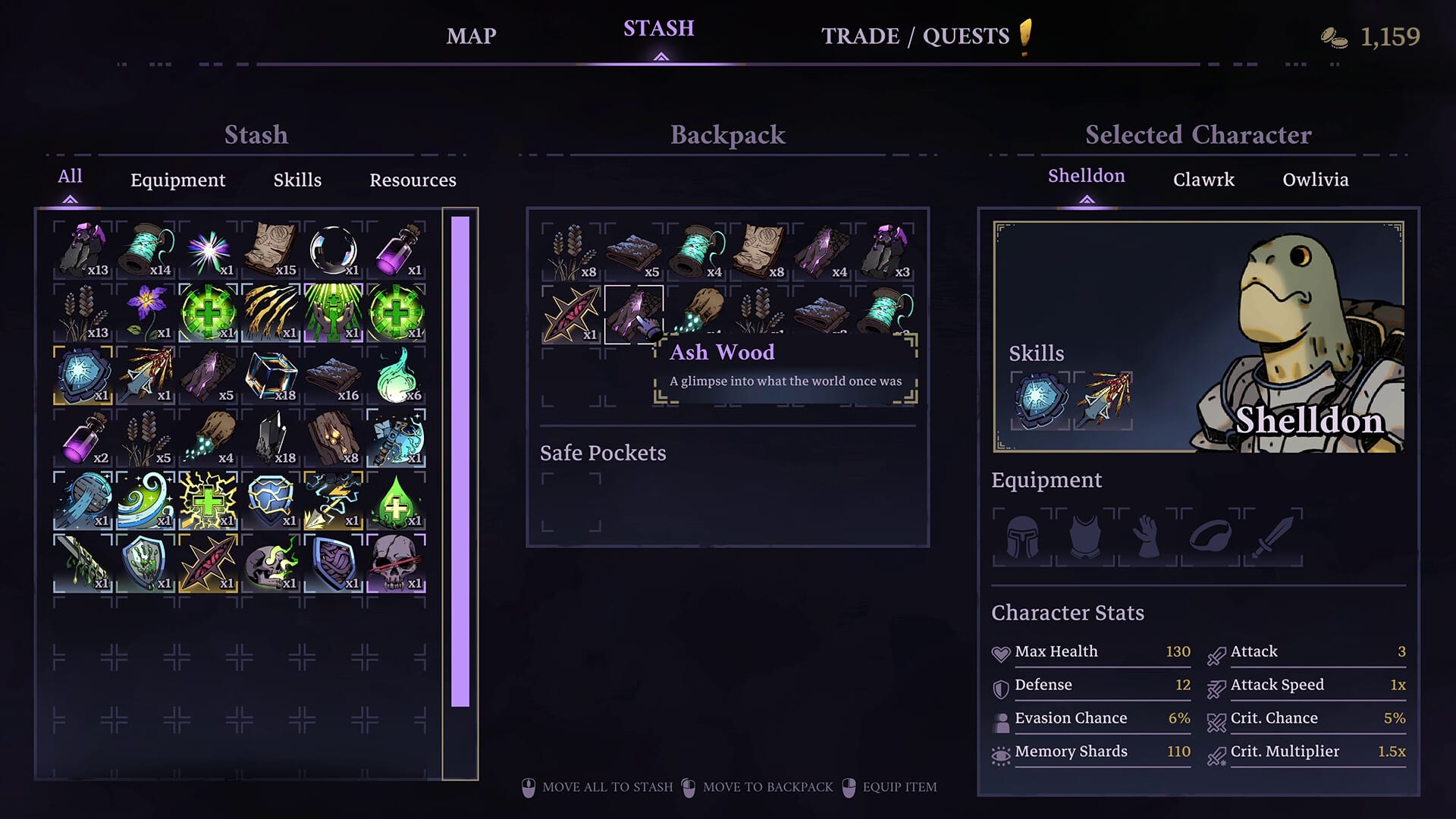
The launch-week patch added sort inventory and transfer to stash buttons to streamline post-run cleanup. After a successful extract:
- Sort — Organize raid inventory by rarity or type to spot valuable items quickly
- Transfer to stash — Move everything you want to keep in one action instead of dragging item by item
- Review safe pocket — Confirm protected items merged correctly before starting the next run
These quality-of-life tools reduce downtime between extractions—use them every run so you never misplace a rare skill drop.
Extraction Timing
When to Extract
- Health Critical — Party health below 30–40% with no healing node nearby
- Inventory Full — No sendback point reachable safely
- Valuable Items — Rare drops already secured in safe pocket; unprotected slots hold replaceable loot
- Difficulty Spike — Elites or new enemy types you have not practiced
When to Continue
- Healthy Party — Above half health with Mshard reserves restored
- Known Route — Next rooms mapped with exit and sendback identified
- Quest Progress — One objective away from completion with resources to finish
Farming Strategies
Efficient Farming Routes
- Learn enemy spawns and material drops per zone
- Optimize pathing through healing nodes and sendback points
- Target specific enemies for skill drops or crafting mats
Difficulty Scaling
- Start in The Sinking Graves and Cold Peaks—launch balance reduced early difficulty
- Gradual increase as your Builds and Crafting improve
- Know your limits; a successful short extract beats a failed deep push
Emergency Procedures
When things go wrong: assess recovery chances, prioritize survival cooldowns, extract immediately if the path is clear, and learn from the wipe. Common mistakes include overextending with a full inventory, ignoring healing nodes, and skipping safe pocket transfers before elites.
Related Guides
- Getting Started — First extraction walkthrough
- Combat Strategies — Survive fights during extractions
- Map Areas — Zone layouts, nodes, and sendback locations
- Crafting Guide — What to do with extracted materials
Frequently Asked Questions
Quick answers to the most common questions.
How much do healing nodes restore after the launch patch?
Healing Nodes restore 50% of your Health and Mshard as of the July 2026 launch-week update.
What happens if I die during extraction?
You lose all collected loot except items in your safe pocket. Sendback shipments already delivered to stash are kept.
What are sendback points?
Map locations that ship inventory loot to your stash mid-run without ending the extraction—use them when bags fill up.
How do stash sort and transfer buttons work?
After extracting, sort organizes your raid inventory and transfer to stash moves kept items in one action for faster cleanup between runs.
When should I use the safe pocket?
Before optional elites or deep pushes—store enemy skill drops, Epic materials, and quest items that you cannot afford to lose.